The Curiosity Gap: What stories do audiences wish TV news would cover more?
At the e4m NewsNext Summit 2025, the panellists were unanimous that audiences are capable of engaging with complex, emotionally layered narratives
 by
by
Published: Dec 17, 2025 11:54 AM | 3 min read
 Follow Us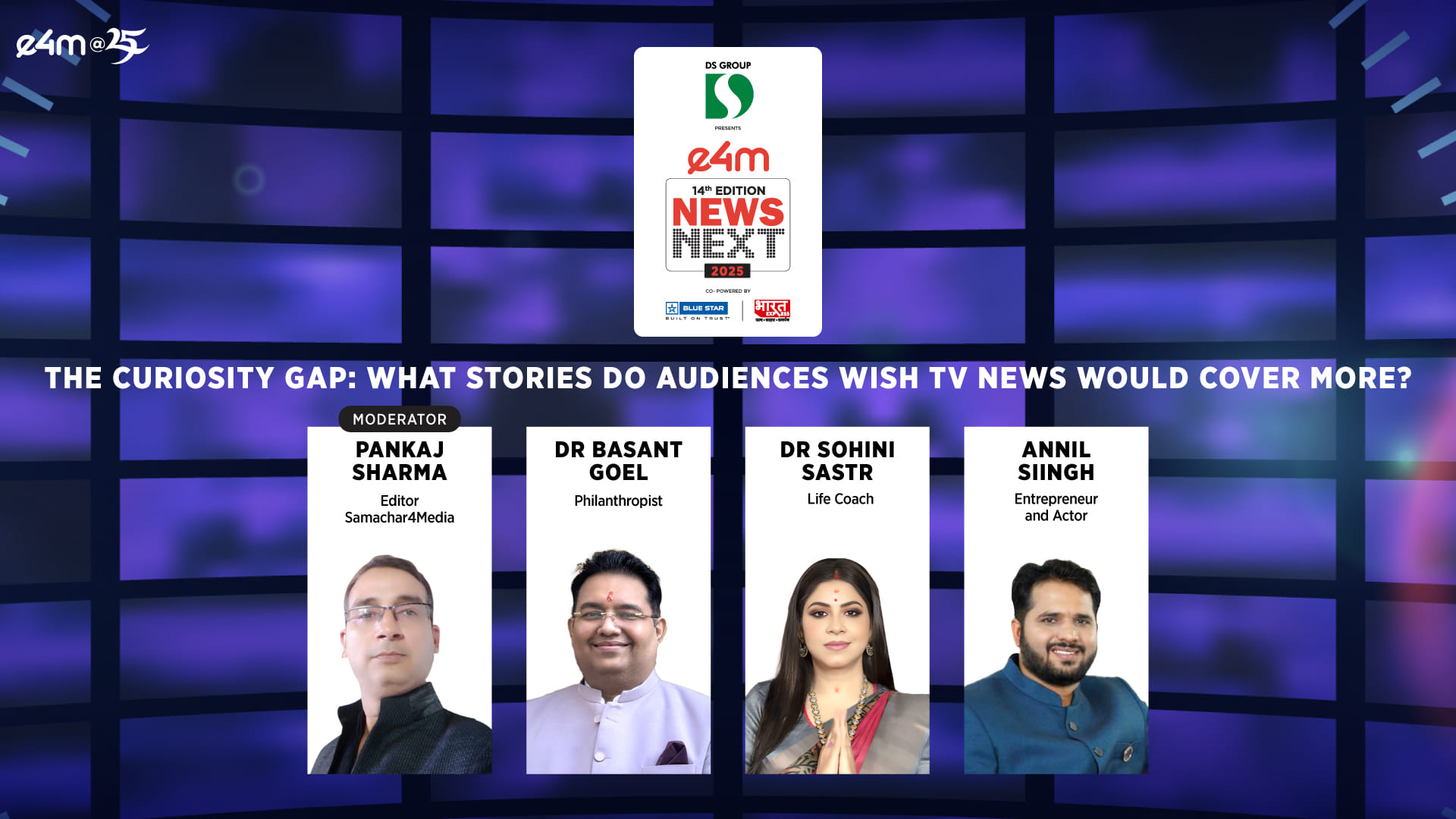

At the e4m NewsNext Summit 2025, a panel discussion stepped away from the usual conversations around ratings and reached to ask a more uncomfortable question—what do viewers really want from television news today?
The session, titled “The Curiosity Gap: What Stories Do Audiences Wish TV News Would Cover More?”, brought together voices from journalism, social work, psychology and storytelling.
The discussion was moderated by Pankaj Sharma, Editor, Samachar4Media, with panelists Dr Basant Goel, philanthropist and social impact advocate; Dr Sohini Sastri, life coach; and Annil Siingh, entrepreneur and actor. Each speaker approached the topic from a different perspective, but all returned to the same concern: a widening distance between newsrooms and their audiences.
Sharma opened the conversation by pointing to visible signs of viewer fatigue. He said television news has become overly focused on speed and volume, often at the cost of meaning. Breaking news tickers change constantly, he noted, but leave viewers with little clarity. The real challenge, he said, is no longer how fast news is delivered, but whether it adds value.
Drawing from his work on social causes, Dr Basant Goel spoke about how quickly television news moves on from important issues. He said many social stories are treated as single-day events—covered once and then forgotten. Audiences, he argued, want to know what happens after the cameras leave. They are curious about outcomes, impact and whether any real change follows the coverage.
Dr Sohini Sastri shifted the focus to the emotional state of today’s news consumers. She said audiences are already dealing with anxiety, uncertainty and information overload, and news content plays a strong role in shaping how they view the world. Stories around mental health, resilience and human behaviour resonate deeply, she said, but only when they are handled with sensitivity and depth.
Speaking on storytelling, Annil Siingh said television news often underestimates its viewers. He argued that audiences are capable of engaging with complex, emotionally layered narratives. Loud debates and oversimplified arguments may grab attention briefly, but they rarely build trust. Stories rooted in authenticity and context, he said, are what stay with people.
As the session concluded, Sharma returned to the idea of curiosity. He said bridging the gap between newsrooms and audiences will require editorial courage—questioning familiar formats, slowing down coverage, and listening more carefully to what viewers want to understand.
The discussion left a clear message: television news does not need to be louder to remain relevant. It needs to be more thoughtful. Depth, empathy and continuity, the panel agreed, are essential if TV news is to rebuild trust with audiences seeking more than just headlines.
Read more news about Marketing News, Advertising News, PR and Corporate Communication News, Digital News, People Movement News
For more updates, be socially connected with us onInstagram, LinkedIn, Twitter, Facebook, YouTube & Google News