Sholay at 50: How the iconic film has been setting fire to brands' imagination
Sholay has proved to be a resource that refuses to age; a reservoir of recall that brands keep tapping into
 by
by
Published: Aug 15, 2025 9:00 AM | 5 min read
 Follow Us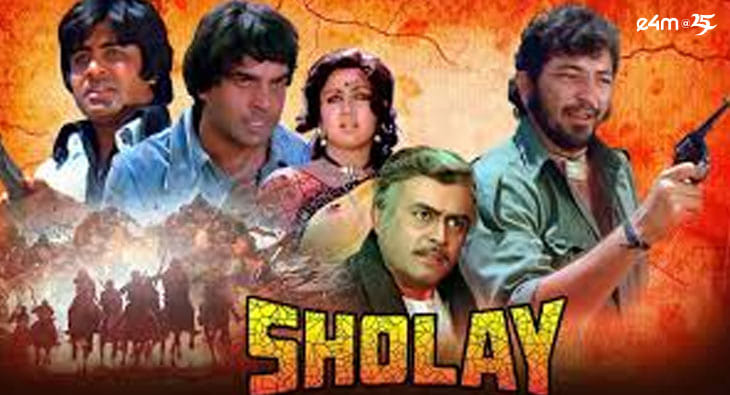

When Sholay released on August 15, 1975, it was billed as India’s first true “curry western,” a spectacle that changed Hindi cinema. Half a century later, it is still rewriting rules, but not just of film. In advertising, too, Sholay has proved to be a resource that refuses to age, a reservoir of recall that brands keep tapping into.
Unlike most film tie-ins that flare up and fade, Sholay has become timeless brand IP. Its dialogues, characters and visuals are etched so deeply into the national imagination that they function as shorthand, instantly recognisable across generations. From biscuits in the 1970s to butter, telecom and even AI-powered car campaigns today, the film’s universe has lived many parallel lives in marketing.
The most recent example came this week, when Amul released its trademark topical marking the film’s golden jubilee. In the cartoon, Jai and Veeru ride their motorbike with the tagline riffing on “Yeh dosti.” The artwork needed no explanation. Viewers recognised the reference instantly, and social media did the rest, spreading it widely. It was a reminder that even in 2025, a sketch of two friends on a bike can still strike a chord, because the memory of that friendship has never left the culture.
View this post on Instagram
A few years earlier, Coca-Cola had already demonstrated the selling power of nostalgia by releasing a limited-edition can called “Basanti’s Orange.” The pack, named after Hema Malini’s effervescent character, was snapped up quickly and turned into a collectible. It was a simple but effective idea: take a character who embodies spirit and joy, and place her on a product meant to refresh and energise. For Coke, it was not just about retro packaging; it was about giving consumers a chance to buy into a memory.
Telecom giant Airtel found its entry point not in characters but in dialogue. Few lines in Hindi cinema have outlived their scenes the way Gabbar Singh’s “Kitne aadmi the?” has. It has been echoed in parodies, memes, and everyday banter for decades. Airtel turned it into the centrepiece of a user-generated content campaign, encouraging audiences to remix the line into reels. Within days, thousands of videos appeared, many from younger users who may never have watched the film in full but recognised the dialogue instantly. The campaign showed how Sholay’s script, dense with quotable lines, still powers digital participation in an era of fleeting trends.
Hyundai took a different approach by tapping into the film’s imagery. In 2023, the carmaker rolled out an AI-powered filter that allowed users to virtually “ride” Jai and Veeru’s motorbike through Ramgarh. It was an invitation to nostalgia, but also a clever way to link the joy of motion back to Hyundai’s own cars. The filter did more than entertain. It sparked genuine consumer action, leading to a notable jump in test-drive bookings, proving that even half a century old, Sholay can still drive hard marketing outcomes.
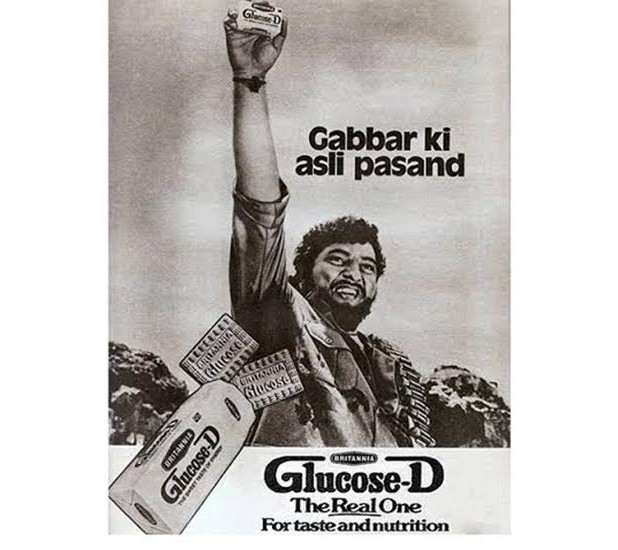
Of course, this relationship between the film and brands is not new. As early as the late 1970s, Britannia had enlisted Gabbar Singh himself to sell its glucose biscuits. The campaign with Amjad Khan was startling at the time—a menacing villain promoting a family snack—but it clicked. Gabbar’s menace had turned into magnetism, and children delighted in echoing his lines. “Gabbar ki asli pasand” entered the lexicon of advertising history, proving that film characters could become endorsers in their own right.
What explains this extraordinary afterlife of Sholay in advertising? The answer lies in its design. Salim-Javed’s script turned dialogue into cultural currency, providing advertisers with ready-made lines that people already loved repeating. The characters themselves were archetypes: Jai and Veeru as embodiments of friendship, Basanti as spirited energy, Gabbar as fear and power. Archetypes travel well, they can be borrowed by brands to stand for togetherness, joy or menace, without losing their punch. The film’s visuals, too, became iconic in their own right. The bike-and-sidecar silhouette or Thakur’s raised arms are so deeply ingrained that even a sketch or parody evokes recognition in seconds.
Another reason is that Sholay has crossed generations seamlessly. Parents who saw it in single-screen theatres passed on its lines to their children. Dialogue LPs, VHS tapes, cable reruns, DVDs, streaming platforms and now short-form clips have all kept it alive, ensuring there was never a break in recall. Unlike most cultural products that remain tied to one generation, Sholay has been continuously reintroduced to new audiences in new formats.
Most importantly, the film’s recall is not just sentimental, it is measurable. Coca-Cola’s cans sold out. Airtel’s campaign generated thousands of user videos in days. Hyundai’s interactive filter led directly to an uptick in leads. Even Britannia’s Glucose-D benefited from Gabbar’s endorsement. Time and again, Sholay has shown that cultural recognition can be translated into commercial action.
The larger lesson for brands is that nostalgia alone is not enough. Campaigns that succeed do more than borrow recall; they anchor the reference in product truth and give consumers something to do with it. Amul linked friendship to food, Hyundai tied the bike ride to its cars, Coke gave people a can to collect, and Airtel invited users to remix and share. In each case, the film supplied the hook, but the brand supplied the interaction.
At fifty, Sholay is more than India’s most celebrated film. It is also its most enduring piece of brand IP, one that has travelled from cinema halls to hoardings, from biscuits to butter, from jingle cassettes to digital filters. In Ramgarh, Gabbar may have been the villain, but in the world of marketing, he, and the film he belonged to, have become heroes.
Read more news about Marketing News, Advertising News, PR and Corporate Communication News, Digital News, People Movement News
For more updates, be socially connected with us onInstagram, LinkedIn, Twitter, Facebook, YouTube & Google News