The Enduring Mystique of Shah Rukh Khan: 6 reasons why SRK is a six-pack brand
Madhavan Narayanann, senior editor and commentator, decodes SRK, the brand ambassador favourite, and brand SRK
 by
by
Published: Nov 6, 2025 12:54 PM | 7 min read
 Follow Us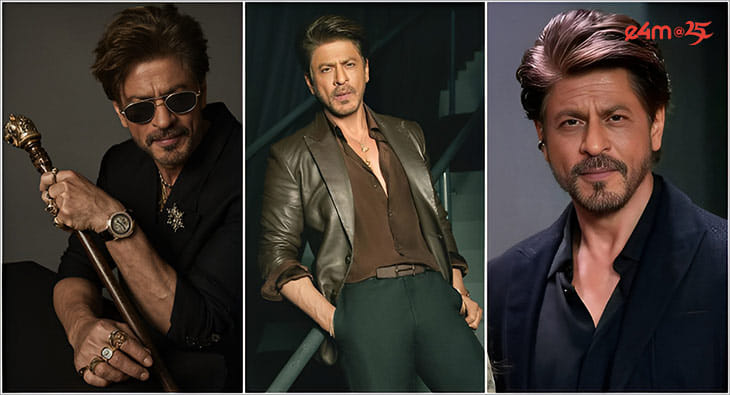

It took a magnificent, trend-setting World Cup victory for India’s women cricketers to somewhat eclipse Shah Rukh Khan’s birthday celebrations on Sunday – but they could not, as you will see. Perhaps it was a gift for the star who turned 60 on the same day. Either way, it showcases the significance of arguably India’s biggest brand icon in the world of marketing – and the fact that the youth icon remains youthful even at 60, even if careful observers can spot some grey edges.
To understand the long-time brand favourite, we need to understand both sides of the brand: SRK, the brand ambassador favourite, and Brand SRK itself. The two are joined at the hip, which is what makes it a phenomenon. We need to look beyond his romantic roles and celebratory mush that filled media space over last weekend to find deeper insights.
It is useful to compare him with southern star Rajinikanth, if only to arrive at contrasts that make SRK special. SRK and Rajini are both famous for blockbuster movies and stylistic statements, but their differences beyond that are sharp. Rajnikanth was not a favourite of marketers of products and himself avoided brand endorsements! Also, there are circles in which the Rajini Act is an object of jokes associated with his unbelievable invincibility, which contrasts with SRK’s vulnerability that sits paradoxically easily with his strong persona – and even earns respect in unlikely quarters.
Brand SRK thus requires a deconstruction that looks beyond the obvious. As a man who made the concept of the six-pack abs (abdomen) famous as a phrase across India, he deserves a six-pack explanation. Here are six reasons why his brand clicks despite his advancing age.
- He represents romance with power and vulnerability: This is the most obvious part of explaining the SRK mystique. Arriving on the screen in an era that saw the decline of the Angry Young Man represented by Amitabh Bachchan, Shah Rukh Khan changed both the goals and the method of the aspirational icon: from fighting for social causes to pursuing personal goals, from using violence and rebellion to using a mix of seduction, charm and relationships, even as he displayed vulnerability. In the 1990s era of Baazigar, Darr, and Raju Ban Gaya Gentleman, he was the struggling wannabe in a way that reminded one of the greyish Angry Young Man as a screen idea. But arriving big-time with Dilwale Dulhaniya Le Jaayenge, he morphed into an everywoman’s Romantic Hero with a script that matched the times in which the man was expected to be strong yet homely, sensitive, and even mischievous. Somewhere, a bull’s eye had been struck. SRK worked on that.
- He discovered an icon, and fitted in: “I am not Shah Rukh Khan. I work for Shah Rukh Khan” is one quotable quote I have heard but an inaccurate one that works. What he really said was: "I am an employee of the image of Shah Rukh Khan.” That is a tribute to both his intellectual ability to grasp the screen myth around himself that represented a style, a value system perhaps and clutch of little mannerisms that made him lovable for his fans whom he consciously described as his “employers.” It takes a lot of hard work to understand and interpret that image. This is something a creative director does routinely in ad agencies and marketing companies – but in SRK, you had someone who was one himself.
- A role model for the global Indian: In a conversation I once had with lyricist Javed Akhtar, I pointed out (and he acknowledged) that the song “Chaand tare tod laoon,” from the SRK-starrer “Yes, Boss” represented an ambitious go-getter and sounded like an anthem for India of the mid-1990s that had switched from socialism to liberalism, ambition, growth and globalisation. SRK as an individualistic, romantic self was then being built as an icon, which I think went into making Brand SRK as a consumerist phenomenon. Newsweek once called him the world’s biggest movie star, while fans waited for hours to see him at the Berlin International Film Festival.
- He bridges multiple gaps: Critics give you respect. Fans make you popular. How do you bring the two together? SRK did that, partially by his own off-screen persona that made him a favourite with the national media and what we call the “English-speaking crowd.” Since brands crave for a certain respect alongside the recall that lowers the cost-per-consumer concept, SRK smoothly slid into that. I have a personal memory of SRK at the Hindustan Times Leadership Summit, where he at once mocked and bonded with an audience of business leaders by joking about how he would now use words like “synergy,” – revealing that he had an MBA mind. At another level, by using his youthful energy, he bonded with a new generation, or should I say generations, of Indians. An MTV survey showed in the 1990s that even then, Prime Minister Atal Behari Vajpayee was considered “cool” because the cool factor was not about age but the way one carried oneself.
SRK = Multi-segment. Bingo! How else do you explain everybody from Pepsi to Dubai Tourism and Omega Watches using the same person as brand ambassador? By acting in offbeat low-budget films like Swades and Chak De India, he built up a screen persona that won him respect to match his romantic charisma. (As Indian women won the ICC World Cup cricket trophy on his birthday night, his Chak De India role as a comeback coach for a women’s team inspired social media memes)
- Entertainer, educator, evangelist, entrepreneur: SRK has many facets, but the least celebrated one is that of his being a smart businessman, which kind of ties in with his educated, middle-class appeal that sits easily with his mass connection. He studied at the prestigious St. Columba’s School in Delhi and even topped his economics class at Hans Raj College in Delhi University, whose famous alumni include former Tata Consultancy Services chairman S. Ramadorai and industrialist Naveen Jindal. I am also reminded of Mick Jagger, the rockstar who dropped out of the London School of Economics to lead the Rolling Stones, and gathered plenty of moss as a smart businessman who understood branding, franchise, and merchandise. Producer SRK’s Red Chillies Entertainment is quite capable of having an IPO, though the star says he is not interested in listing it. He also excels in subtle but strong social messaging in his later movies, a departure from his early days as a mischievous romantic hero.
- Meet Dr Reinvention: SRK works so hard that he smoothly bends genres. In 2007, he offered us a six-pack physique for Om Shanti Om and added two more in an eight-pack-look a few years later. But his later movies, such as Raees, Pathan, and Jawan, show that he is willing to experiment with directors, on-screen character and looks to showcase his capacity for reinvention that reminds one of brands such as Reliance Industries, Microsoft and IBM that embrace new technologies and market opportunities. His latter-day movies (as actor and producer) take a leaf out of the bygone, grey-hued Angry Young Man messaging and repackage it for the Millennial and Gen Z times – but not in an In-Your-Face style of the old Amitabh, Rajinikanth or the late M.G. Ramachandran. Work ethic, patriotism, and social justice are part of his recent plotlines that seem like a throwback to the Amitabh Bachchan era, suggesting that SRK can “pivot” – to use that memorable cliché from Silicon Valley.
Is it any wonder then that Brand SRK is kicking at 60?
Disclaimer: The views expressed here are solely those of the author and do not in any way represent the views of exchange4media.com.
Read more news about Marketing News, Advertising News, PR and Corporate Communication News, Digital News, People Movement News
For more updates, be socially connected with us onInstagram, LinkedIn, Twitter, Facebook, YouTube & Google News