How Footprynt AI is rewriting the playbook on influence and content seeding in India
Footprynt AI's Co-Founder Pratik Gour breaks down how the company is challenging legacy models of creator-brand partnerships, understanding what it really means to ‘influence’ and more
 by
by
Published: May 19, 2025 11:57 AM | 5 min read
 Follow Us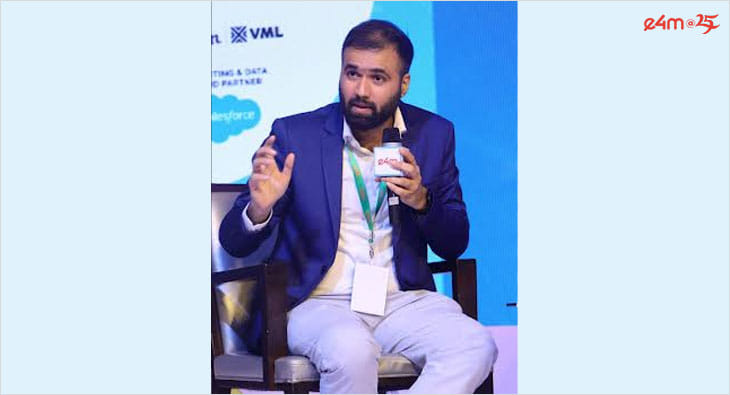

As content seeding and influencer marketing grow more complex in India, Footprynt AI's Co-Founder, Pratik Gour’s data-driven, long-game approach offers a counter-narrative to the often misunderstood influencer ecosystem.
Influencer selection in most brand playbooks still rests on three typical patterns, says Gour. “One, what’s trending, who’s viral right now. Two, personal bias, a brand manager who likes a certain creator. And three, blind peer-following, someone sees a rival working with a creator and jumps in too.”
What Footprynt AI brings to the table is a fourth, more methodical approach: data. “We analyse past campaign results, not just for the same brand but for similar categories. If we haven’t worked with, say, a specific FMCG brand, we’ll refer to campaigns we ran for Vedika or Bailey. It helps us guide influencer selection based on performance, not perception.”
That’s why, he notes, big-ticket creators charging Rs 70–75 lakh for a single post often aren’t recommended. “Why bet it all on one star when you can spread your risk across 20–30 creators who cost a fraction but offer variety and volume?”
Another key misstep, according to Gour, is the disconnect between influencer messaging and a brand’s larger campaign narrative. “Your TV ad says one thing, your digital banners say another, and the influencer says something entirely different—it confuses your audience,” he explains. “Unless it’s a standalone influencer campaign, the message has to be consistent across touchpoints.”
Risk, culture, and content sensitivity
Yet, content seeding isn’t without risks. “There’s a thin line between being topical and being tone-deaf,” says Gour, referencing the increasing ease with which brands and creators alike get “cancelled” online. “You don’t want to be the financial brand that tried a meme format and ended up looking irresponsible.”
Instead, he argues, content seeding works best for FMCG brands, especially those targeting Tier 2 and Tier 3 cities. “Those audiences aren’t looking for international aesthetic vlogs. They want humour, relatable content they can share on WhatsApp and laugh at during lunch breaks.
That doesn’t mean throwing caution to the wind. He recalls a now-infamous newspaper ad that implied actress Priyanka Chopra’s identity was defined by her past male partners’ surnames. “Someone thought that was clever,” he says. “The backlash cost someone their job. So it’s not just influencer content, brands themselves need cultural intelligence.”
The recent controversy around influencers like BeerBiceps and Samay Raina underscores that point. “The problem wasn’t that it was offensive, it’s that people now care about what influencers say,” Gour argues. “Ten years ago, they would’ve been ignored. Today, their words have a commercial impact.”
Brand expectations’ with influencer marketing
What makes influencer marketing uniquely powerful, Gour says, is its ability to offer multiple, authentic voices under one brand umbrella. “You can have a fashion blogger, a mom influencer, a comedian, and a vlogger all talk about your product. That’s five different lenses for one brand message and much more cost-effective than a single TVC.”
However, Gour draws a clear boundary between branding and sales. “If you're expecting direct sales from influencer marketing outside of beauty, fashion, tech, or finance, you’re going to be disappointed. It’s a long-term branding play, not a conversion hack.”
Despite the growing sophistication of influencer marketing, Gour says many clients still arrive with unrealistic expectations. “They expect sales to spike or their social feed to look as polished as Nykaa’s after a two-week campaign. Influencer marketing doesn’t work that way unless it's part of a broader, integrated digital strategy.”
Another persistent challenge? Reputation management. “Even if an influencer delivers results, their perceived alignment with a brand’s values can become a problem. Certain brands like J&J, for instance won’t touch a creator with any public controversy, even years later. That’s just how brand memory works.”
Scaling beyond performance marketing
Compared to global markets, Gour believes India is still early in its influencer evolution. “In North America and Southeast Asia, content seeding has a much higher share of digital budgets. Here, we’re still hooked on performance marketing because it gives you numbers—CPCs, CTRs, impressions.”
But what happens when everyone is shouting at once? “Look at Diwali or Valentine’s Day,” he says. “Big brands with deep pockets will dominate performance spaces. Smaller brands end up throwing money into a void, hoping for visibility they can’t afford.”
The solution, once again, lies in content seeding. “If you're a mid-tier brand with a limited budget, influencer content offers better storytelling and deeper engagement. It’s not expensive if done right. Brands spending Rs 3 crore on digital might only allocate Rs 30–50 lakh to influencer marketing which is just 10–15%. I expect that number to rise to 40% by 2028.”
Why the shift? Because the current performance ecosystem is controlled by just a handful of tech giants—Meta and Google dominate via YouTube, Instagram, Gmail, and app ads. “As brands diversify away from these monopolies, content seeding will offer a more flexible, creative alternative,” Gour predicts.
Better data optimisation = Better future
“When we started in 2017, I could name 20 fashion influencers in India,” Gour remembers. “Now, the space has exploded. There are micro and nano influencers in every niche, from parenting to pets to poetry.”
That diversity, combined with better tools, better data, and a maturing understanding of what influence really means, is what keeps Gour optimistic about the future.
In the end, he says, “Influence isn’t about virality, it’s about value. And the brands that get that right are the ones who’ll win.”
Read more news about Marketing News, Advertising News, PR and Corporate Communication News, Digital News, People Movement News
For more updates, be socially connected with us onInstagram, LinkedIn, Twitter, Facebook, YouTube & Google News