Will the ad agency consultancy model work?
Veteran adman Prabhakar Mundkur writes on why ad agencies could be looking at diversifying into consulting
 by
by
Published: Oct 9, 2025 9:37 AM | 5 min read
 Follow Us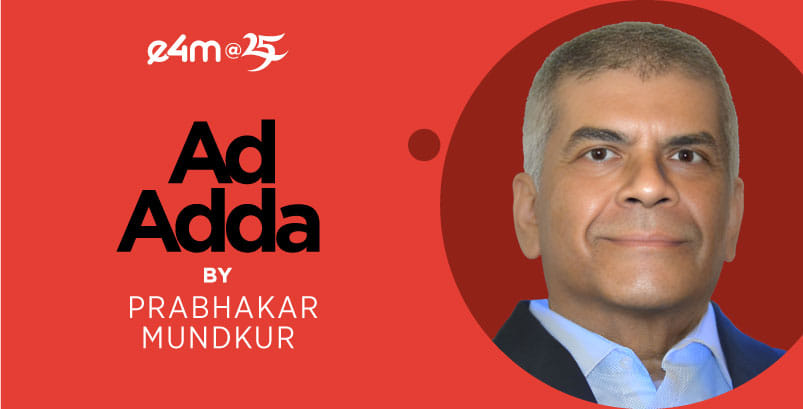

Over the last few months, we have heard that a few of our ad agencies have started consultancy divisions. Some have done it are only following the lead taken by their Western counterparts.
There are two main reasons why ad agencies could be looking at diversifying into consulting. One, agency margins have been in a state of steady decline over the last few decades and a new arm in consultancy is likely to shore up current agency margins. Two, consultancy companies have been on an acquisition of ad agencies and digital capabilities. So, this is a reaction from the ad agency fraternity to reclaim lost ground and protect their traditional turf. By moving into consulting, agencies are trying to prevent consultancies from eating deeper into their client relationships and revenue streams. It is as much a defensive strategy to hold on to C-suite access as it is an offensive play to diversify their offerings.
But how likely is to work?
Why it could work
- Overlap in skill sets: Agencies already do a lot of what consulting firms claim—market analysis, consumer insight, growth strategy, and even organizational transformation (especially in customer-facing functions like sales, digital adoption, and experience design).
- Creativity as a differentiator: Consulting firms are strong in analytics and process, but agencies bring storytelling, brand building, and consumer empathy. If combined with strategic rigor, this could be powerful.
- Client demand for integrated solutions: Many CMOs (and increasingly CEOs) don’t want separate vendors for strategy, execution, and marketing transformation. An agency that can do both could become a one-stop partner.
Why it may not work
Perception problem: Agencies are seen as execution partners, not boardroom advisors. Convincing CEOs and CFOs that they belong at the strategy table is a cultural hurdle.
Revenue model conflict: Consulting thrives on high-fee, time-based engagements. Agencies are often tied to project-based or retainer models with lower margins.
Capability gap: True consulting requires depth in operations, finance, supply chain, tech integration—not just marketing. Agencies may need acquisitions or restructuring to credibly play here (as Accenture did by acquiring creative shops, but in reverse).
Trust & access: Boards and top leadership already trust the McKinseys and Bains of the world. Breaking into that circle isn’t easy.
Realistic outcome
Agencies might successfully extend into marketing-led consulting (customer journeys, brand transformation, experience strategy, digital transformation with a consumer lens). But full-fledged business consulting—M&A, operational turnaround, org design—may remain out of reach unless they radically reinvent.
So: it can work, but in a niche overlap zone, not as a straight replacement for consulting firms.
If we truly want to evaluate how consulting might work as an extension of ad agency servies the following factors would need to be accounted for.
- Alignment of capabilities + hiring: To be credible, the agency needs genuine consulting talent: data scientists, strategists, digital transformation experts, operations / tech integration. It's not enough to rebrand “planning + insight.”
- Clear positioning with clients: Clients must perceive the agency not just as a creative partner but as someone who can help them with business outcomes — growth, efficiency, operations, business model change. That means trust, case studies, senior-level relationships.
- Balance of revenue models: Consulting often has different billing models (fixed fee, time & materials, outcome-based) compared to creative / media. Margins and cash flows differ. Agencies must adapt their commercial models.
- Internal culture & structure: There needs to be structural separation or clarity—if the consulting arm is too embedded within “traditional agency” roles, it may suffer from mixed priorities. Incentives for consulting & for creative departments are often different.
- Integrations / acquisitions: Many agency groups achieved consulting scale by acquiring consultancies or tech/data firms, not just by growing from inside. (E.g. Publicis with Epsilon, or acquiring tech / digital-transformation players)
- Client demand is real, but selective: Big clients, enterprises undergoing transformation (digital, data, experience) are especially interested. For smaller or more “advertising‐oriented” clients, they may still prefer agencies doing creative + media, not broad consulting.
Agencies can and do successfully extend into consulting / transformation. The ones that do it well tend to:
- invest heavily in data / tech / platforms
- clarify what consulting means for them (strategy + tech + implementation)
- recruit talent accordingly
- build credibility via measurable outcomes
But they also face real friction: culture, margin pressures, client expectations and positioning.
In the end, whether the ad agency consultancy model succeeds will depend less on intent and more on execution. Agencies that can genuinely evolve from storytellers to strategic growth partners—without losing their creative soul—stand the best chance of thriving. The challenge is not about adding a “consulting division” to the org chart, but about redefining what an agency means in a business world driven by data, experience, and transformation. Those who bridge that gap between creativity and consulting may well shape the next chapter of the communications industry.
Disclaimer: The views expressed here are solely those of the author and do not in any way represent the views of exchange4media.com.
Read more news about Internet Advertising India, Marketing News, PR and Corporate Communication News, Digital Media News, Television Media News
For more updates, be socially connected with us onInstagram, LinkedIn, Twitter, Facebook YouTube & Google News
