Talent to become biggest differentiator in the AI era: Kartik Sharma
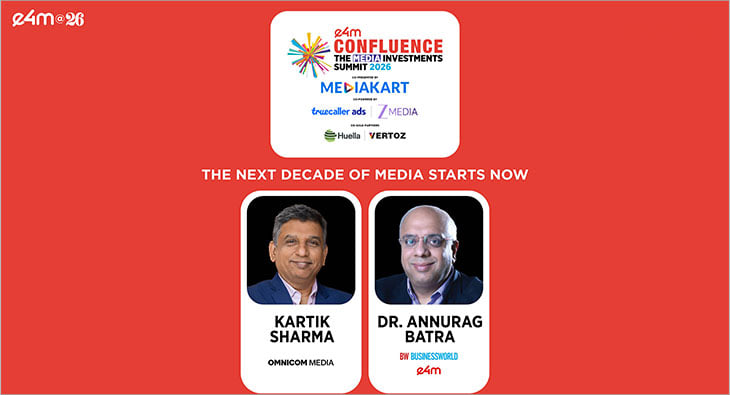
Kartik Sharma, CEO, Omnicom Media India, engaged in a fireside chat with Dr Annurag Batra to decode the next decade of the media and advertising industry at Media Ace Conference 2026
 by
Published: Nov 24, 2026 9:48 AM | 5 min read
 Follow Us

- Kartik Sharma, CEO of Omnicom Media India, emphasized the importance of talent as a key differentiator for agencies in an increasingly automated media landscape, highlighting the need for investment in talent across all management levels.
- He discussed the evolving role of media agencies, which must enhance their consulting and technology capabilities while maintaining a strong understanding of brands and consumers, as the industry shifts towards data-driven solutions.
- Sharma noted that India's advertising market is projected to approach ₹2 lakh crore, but the country continues to underinvest in advertising relative to its economic growth, indicating significant potential for industry expansion.
- He predicted that digital media will dominate future advertising budgets, accounting for 65-70% of expenditures, while suggesting that agencies may need to adopt new business models, including outcome-linked compensation, to attract and retain talent in a competitive environment.
While automation could reduce the industry's dependence on manual work, Kartik Sharma, CEO, Omnicom Media India, noted talent would become a critical differentiator for agencies competing in an environment where access to AI models and technology is becoming increasingly common.
Speaking at a fireside chat titled 'The Next Decade of Media Starts Now', in conversation with Dr Annurag Batra, Chairman and Editor-in-Chief of BW BusinessWorld and Founder of exchange4media, Sharma spoke about the impact of automation on agency operations, the need to invest in talent, the evolution of media agency's role and more.
He pointed out that agencies would need to invest in talent across junior, middle and senior management levels, alongside strengthening their learning and development programmes.
"When everything is equal and everyone can buy the same AI models, who's going to win? That question is clearly talent," he said.
Sharma also highlighted the importance of data capabilities, referring to Omnicom's integration of Axiom, which he described as the world's largest data company. He said the platform has more than 580 million unique IDs and over 5,000 variables, providing the group with an advantage in understanding consumers and developing targeted media solutions.
He added that the group's Omni platform, which has been developed over several years through significant investments, is now integrated into its Axiom offering.
According to Sharma, the media agency's role is also evolving beyond traditional media planning and buying. With media increasingly becoming technology-driven, agencies are being pushed to develop stronger consulting and technology capabilities while retaining their understanding of brands and consumers.
Dr. Batra cited several major accounts associated with the network, including Netflix, AMFI, Motilal Oswal Financial Services, Zurich Insurance Group, L&T, IBM, Jaguar Land Rover, Marico, Adidas, Amazon Music, NPCI, Wonderla Holidays, Ramco Cements and Bank of Baroda's digital business, among others acquired by Omnicom.
India's advertising market approaches ₹2 lakh crore
The conversation also touched upon the growth of India's advertising market and the changing expectations of marketers.
Dr Batra noted that India's advertising expenditure, which stood at around ₹1.75 lakh crore in the previous year, is expected to approach ₹2 lakh crore this year.
However, Sharma argued that despite the growth in advertising spends, India continues to underinvest in advertising relative to the size and growth of its economy.
Citing the relationship between advertising growth and GDP growth, he said India's advertising growth rate has remained below its GDP growth rate over the last 11 years, except during the Covid period.
He compared India's advertising growth-to-GDP growth ratio, which he placed close to one, with the US at around 3.3 to 4 and the median of the top 10 markets, excluding India, at approximately 4.2.
According to Sharma, this indicates significant headroom for the Indian advertising industry to grow.
He also observed a shift in boardroom conversations over the past few years. While efficiency and cost reduction dominated discussions between 2020 and 2025, growth is increasingly becoming the priority for CEOs and CMOs.
"Some of the biggest listed companies, their single one word is growth," he said.
Sharma explained that brands looking to grow cannot depend solely on existing heavy buyers. Instead, they need to reach light buyers and newer audiences, which requires sustained investment in brand building and media.
He acknowledged that short-term performance marketing remains important but agencies and marketers need to look beyond last-click attribution when evaluating the effectiveness of advertising investments.
Digital to command 65-70% of future media spends
Offering his assessment of how a hypothetical ₹500 crore media budget could be allocated in the coming years, Sharma estimated that digital could account for 65-70% of the total expenditure, with a significant portion directed towards video and connected television (CTV).
He estimated that outdoor and cinema could together receive less than 5%, while print could account for another 6-7%. Linear television, meanwhile, could retain a 10-12% share.
Sharma said print would continue to hold relevance in regional markets and categories where consumer trust plays an important role. Linear television, too, would retain a role given India's scale and media consumption patterns.
He clarified that the allocation was his personal assessment rather than a definitive industry forecast.
Media agencies may need new business models to retain talent
Beyond technology and media investments, Sharma also flagged the economic challenges agencies face in attracting and retaining high-quality talent.
Responding to a question on whether media agencies would be willing to deploy their profits to hire talent capable of competing with consulting and technology firms, he said the investment was not happening uniformly across the industry.
He attributed this partly to the need for better monetisation models.
Sharma suggested that outcome-linked compensation could evolve beyond conventional agency fees, with agencies exploring revenue-sharing, profit-sharing and even equity participation in client businesses.
"By outcome, we can also be shareholders. And that changes the dimension of how you will be," he said.
In the age of AI
As media agencies navigate AI-led automation, rising data requirements and changing client expectations, Sharma's comments point towards a significant restructuring of the industry, where technology may reduce the need for repetitive roles while increasing the premium on strategic thinking, specialised expertise and talent.
While AI is expected to automate repetitive and manual processes, agencies will increasingly need people with strong strategic, analytical and technological capabilities to deliver value beyond traditional media planning and buying, Sharma noted. “The growing convergence of influencer marketing and e-commerce, coupled with the rising importance of consumer data, will further push agencies towards integrated solutions.”
Sharma also indicated that traditional fee-based models may gradually give way to outcome-linked arrangements, including revenue-sharing, profit-sharing and equity participation. The next phase of the media business, therefore, will depend not just on scale or technology adoption, but on how effectively agencies combine human expertise, data intelligence and measurable business outcomes.
Read more news about Internet Advertising India, Marketing News, PR and Corporate Communication News, Digital Media News, Television Media News
For more updates, be socially connected with us onInstagram, LinkedIn, Twitter, Facebook YouTube & Google News