The global rise of Indian-origin leaders
Shailesh Jejurikar’s appointment as CEO of P&G adds to the growing list of Indian-born leaders at the helm of major global corporations, suggesting a deeper force at play
 by
by
Published: Jul 30, 2025 11:23 AM | 5 min read
 Follow Us

Professionals of Indian origin are increasingly being appointed to lead some of the world’s most influential corporations, across industries and continents. These leaders — spanning banking institutions, FMCG companies, tech giants, and even high-end fashion houses — are reshaping the global business landscape, not as anomalies, but as the new standard.
The recent announcement of appointing Shailesh Jejurikar as the first Indian to lead Procter & Gamble (P&G) highlights that the rise of Indian-origin global CEOs is not a new phenomenon. However, over the past decade, its scope and prominence have significantly increased. The preponderance of CEOs of Indian ancestry in high-impact industries is what makes it noteworthy at the moment. By 2023, at least 10% of Fortune 500 immigrant CEOs have been Indian.
The key characteristics of a successful CEO of any company like grit, ambition, and a strong desire to succeed in challenging, high-pressure situations are also what describes the immigrant mindset. This is further backed by strong academic backgrounds (from universities like IITs and IIMs), exposure to the world, and a cultural upbringing that emphasizes flexibility, problem-solving, and long-term thinking.
Shailesh Jejurikar
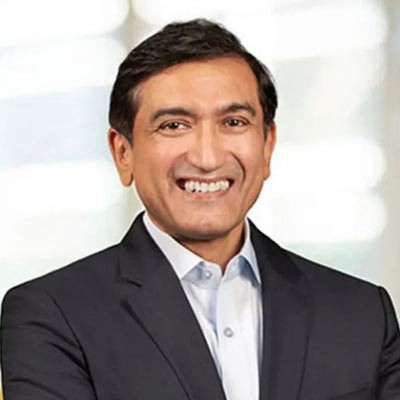
From January 1, 2026, Shailesh Jejurikar will take over as CEO of Procter & Gamble, becoming the first Indian to hold the position in the company’s 187-year history. He has been with P&G since 1989 and is currently the COO. He has overseen important international business areas such as Health Care and Fabric & Home Care. Jejurikar is renowned for using efficiency and strategic innovation to propel growth. He has an MBA from IIM Lucknow and a bachelor's degree from Mumbai University.
Sabih Khan
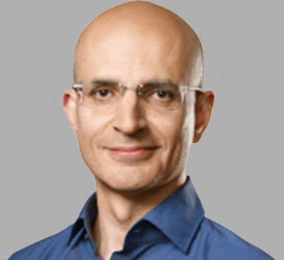
Sabih Khan officially took over as Apple's Chief Operating Officer (COO) in July 2025, replacing long-time operations chief Jeff Williams. He joined Apple in 1995 and rose to the position of Senior Vice President of Operations in 2019. He is primarily responsible for overseeing the company's worldwide supply chain, manufacturing, logistics, procurement, and AppleCare services. Under his direction, Apple strengthened its supplier responsibility initiatives, increased its manufacturing presence in the United States, and drastically decreased its carbon footprint—by more than 60%. He graduated from Tufts University with a bachelor's degree in economics and mechanical engineering, and Rensselaer Polytechnic Institute with a master's degree in mechanical engineering.
Neal Mohan
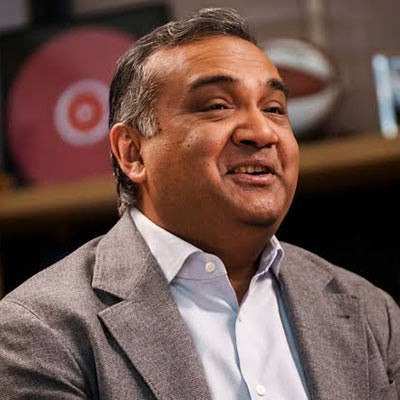
In 2023, Neal Mohan succeeded longtime CEO Susan Wojcicki as CEO of YouTube. He previously held the position of Chief Product Officer at YouTube, where he oversaw significant advancements such as YouTube Shorts, Premium memberships, and the platform's foray into live streaming and gaming. During his tenure, he has concentrated on content moderation, creator monetization, and managing the rapidly evolving digital content market. Mohan was born in India and grew up in the United States. He attended Stanford to study Electrical Engineering and graduated with an MBA from the Stanford Graduate School of Business.
Sundar Pichai
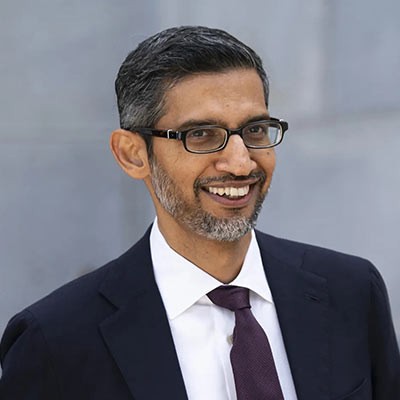
After serving as Google's CEO since 2015, Sundar Pichai was appointed CEO of Alphabet Inc., the company's parent in 2019. Google increased its expenditures in cloud infrastructure, hardware, and artificial intelligence under his direction. He was instrumental in the introduction of Google Chrome, updates to the Android operating system, and the company's foray into generative AI through Bard and Gemini. He was born in Madurai, Tamil Nadu, and attended IIT Kharagpur to study metallurgical engineering before earning an MBA from Wharton and an MS from Stanford.
Satya Nadella
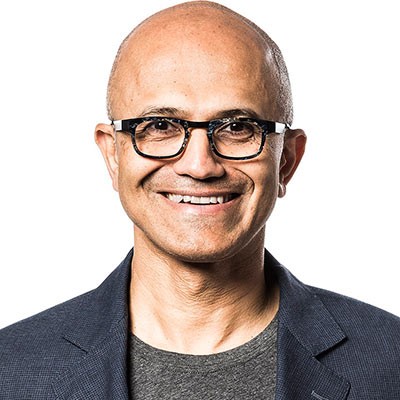
In 2014, Satya Nadella was appointed CEO of Microsoft, and in 2021, he was made Chairman. Under his direction, Microsoft evolved from a Windows-focused company to a dominant force in the cloud. Microsoft's cloud platform, Azure, emerged as a formidable opponent to Amazon Web Services. In addition, Nadella oversaw significant acquisitions, such as Activision Blizzard and LinkedIn. During his tenure, Microsoft's market value has more than fivefold increased, and he is credited with revitalizing the company's culture. He was born in Hyderabad and graduated from the University of Wisconsin, the University of Chicago Booth School of Business, and Manipal Institute of Technology.
Leena Nair
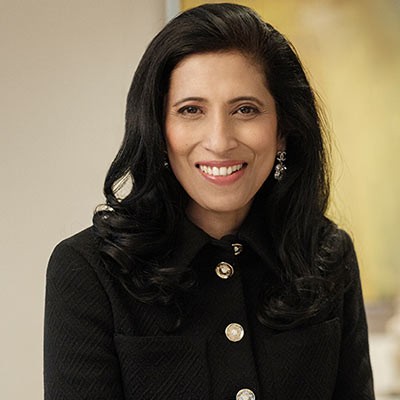
In 2022, the French luxury fashion brand Chanel appointed Leena Nair as its global CEO. She is among the few women of Indian descent in charge of a major international luxury brand. Prior to this, Nair spent thirty years as the Chief Human Resources Officer of Unilever. She is well-known for emphasizing employee welfare and inclusion, and she has introduced a new human-centered leadership approach to Chanel. Nair has an MBA in Human Resources from XLRI Jamshedpur and graduated from Walchand College of Engineering.
Arvind Krishna
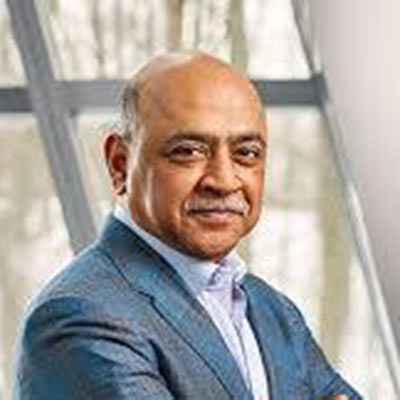
In April 2020, Arvind Krishna became IBM's CEO, and in January 2021, he was appointed Chairman. Since then, he has changed the 113-year-old IT company's focus to AI and hybrid cloud computing. He played a key role in one of the biggest tech acquisitions in history, IBM's $34 billion purchase of Red Hat. Under Krishna's direction, IBM is said to have been relevant again in the corporate technology space. After graduating from IIT Kanpur, he went on to the University of Illinois at Urbana-Champaign to obtain a PhD in Electrical Engineering.
Ajay Banga
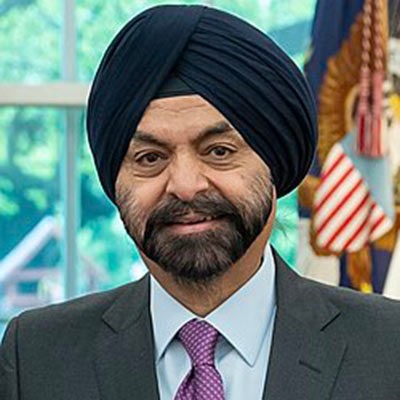
Prior to taking over as President of the World Bank Group in 2023, Ajay Banga was the CEO and Executive Chairman of Mastercard and Vice Chairman of General Atlantic. During his decade-long tenure at Mastercard, he was renowned for using digital innovation to increase financial inclusion and almost triple the company's income. Banga is committed to changing the World Bank's stance on global inequality and climate funding. After attending Delhi's St. Stephen's College to study economics, he graduated with an MBA from IIM Ahmedabad.
The growing number of CEOs with Indian ancestry signals a deeper shift in global corporate leadership. Along with their technical expertise and commercial qualifications, these people also bring a cross-cultural intelligence that is becoming more and more valuable in today's broken and globalized world. Their ascent reflects the growing confidence in India's international diaspora as well as the country's talent pipeline. And if current trends are any indication, this is just the beginning.
Read more news about People Movement, Internet Advertising, Marketing, Digital Media, PR and Corporate Communication
For more updates, be socially connected with us onInstagram, LinkedIn, Twitter, Facebook, YouTube & Google News