Timex boosts ad spends to Rs 60 cr annually, targets expanding Gen Z audience
Deepak Chhabra, Managing Director, Timex India, spoke to e4m on how the 170-year-old global brand is being reimagined for the new-age Indian consumer
 by
by
Published: Jun 9, 2025 12:10 PM | 8 min read
 Follow Us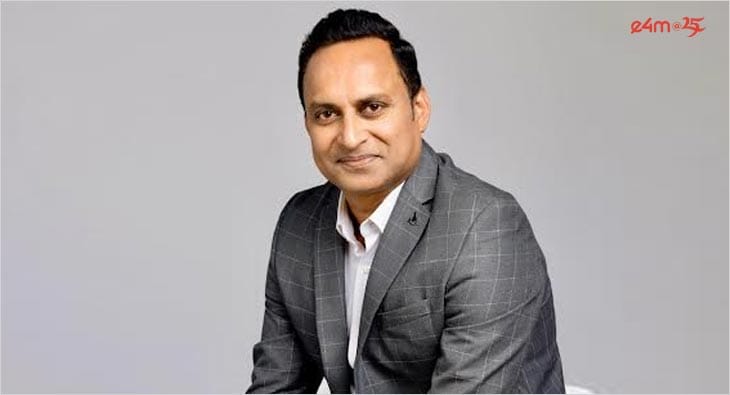

As the race to capture Gen Z’s attention heats up, heritage watchmaker Timex India is undergoing a sweeping transformation, backed by ramped-up ad spends, a digital-first strategy, and a repositioning of analog watches as fashion accessories rather than just timekeeping tools. In FY25, the company clocked nearly 30% revenue growth with EBITDA margins doubling to around 9%.
In a conversation with e4m, Deepak Chhabra, Managing Director, Timex India, outlined how the 170-year-old global brand is being reimagined for the new-age Indian consumer. Once synonymous with reliability and utility, Timex is now placing big bets on storytelling, pop culture collaborations, and omnichannel innovation to engage the country’s digitally native, style-conscious youth.
A major part of this reinvention is driven by a sharp increase in marketing investments. “Earlier, we were spending about 7–8% of revenue on marketing. Now, that figure is closer to 10–10.5%, amounting to ₹55–60 crore annually,” said Chhabra. “This increase aligns with our brand transformation and revenue growth - our topline has doubled over the past three years.” Over the last three years, the company’s revenues doubled from Rs 263 crore to Rs 540 crore.
This strategic shift also reflects a broader challenge many legacy brands face today, that is, how to stay relevant in a market where brand perception is shaped in real time by social media trends and influencer culture. For Timex, the answer lies in combining its time-honored credibility with constant innovation and cultural agility.
“Balancing heritage with contemporary relevance is always a challenge,” Chhabra added. “But in the case of watches, trust and legacy are key pillars — and that works in our favor. However, legacy alone isn't enough — we needed to innovate constantly and stay in sync with evolving consumer behavior.”
Chhabra further points to a sharp pivot in the category itself. “Over the past 5–7 years, watches have moved from being mere timekeeping tools to fashion statements. This shift was driven by two key factors: first, smartphones replaced the basic utility of watches; and second, post-COVID, we've seen a clear trend of premiumisation - people are willing to spend more across categories, including watches.”
Recognizing this evolution, Timex restructured its brand framework along three pillars: brand, product, and channel.
Media mix
At the heart of this reimagination is a dramatic shift in the media mix.
“80% of our marketing investments are now digital. We reach consumers through influencer-led campaigns, celebrity collaborations, and social media content. We've partnered with cultural phenomena like Stranger Things and Wednesday on Netflix to stay relevant,” he said.
The remaining 20% of the marketing budget is spent on point-of-sale activations - both online and offline - underscoring the brand’s commitment to an omnichannel approach. Chhabra further outlined that print plays a very limited role in his media strategy often confined to clear calls to action.
“Traditional media like print plays a very limited role, usually reserved for larger campaigns with clear calls to action. Print may support marquee campaigns, but it won’t become a core focus for us. Our focus remains on digital and high-impact events that deliver 8–10 million impressions per activation.”
Timex has also expanded its distribution channels, as Chhabra said, “We are present across 5,000 points of sale, e-commerce platforms, our own website, and even on quick commerce platforms - we were actually first ones in our segment to enter that arena. Along with these, we’ve also expanded our exclusive brand outlets under Timex World and Just Watches.”
Attracting Gen Z
For Timex, attracting younger consumers required not only new channels but also new product stories.
“Gen Z is trend-driven but also values individuality. So, we created multiple franchises for different wearing occasions, Fria for ethnic wear, Marlin for retro lovers, Q Timex for casuals, and Waterbury for heritage enthusiasts.”
Timex also operates with a portfolio approach, functioning as a house of brands. “From luxury (like Versace) to fashion (Guess, Nautica) to mass-market (Timex, TMX), we cater to every consumer segment. This is unique in the watch category,” he added.
The move also caters to bottom-of-the-pyramid consumers. “With over 250 million Indians moving into the lower-middle class, our brand TMX serves as an entry point for first-time watch buyers.”
Timex has also significantly expanded its product range and pricing. According to Chhabra, the brand previously operated largely under the ₹10,000 mark, but now offers watches priced up to ₹20,000 — a move that has helped broaden its consumer base.
Influencer collaborations and other campaigns
To boost relevance, Timex has leaned heavily into influencer marketing. From brand ambassador Ananya Panday to IPL sponsorships with Punjab Kings and Gujarat Titans, the brand’s campaigns aim for cultural stickiness.
“We collaborate with over 1,200 influencers annually across tiers. What sets us apart is that our collaborations aren’t one-offs. Influencer feeds are already crowded with brand partnerships. So, if we want to build real recall and influence the purchase funnel, we maintain ongoing relationships — ideally engaging with them 3–4 times over a few months.” While reach is important for the brand, what matters more is how interactive they are with their audience, the demographics of their followers, and how closely aligned they are with the brand.
Chhabra emphasized that the brand evaluates not just reach but engagement and relevance. “It’s not just about the number of followers—it’s about engagement and relevance. The choice also depends on the campaign.”
“For instance, last year’s ‘Waste More Time’ campaign and its extension ‘Make Time Yours’ made travel influencers just as important as fashion influencers, because people were traveling like never before.”
Regional penetration
While metros still account for around 50% of revenue, Chhabra sees the next wave of growth emerging from India’s heartland.
“Digital has really leveled the playing field. Whether it’s tier 1 or tier 3, digital lets you target precisely—by geography, demographics, or brand fit. Thus, tier 2 and 3 cities are now more digitally savvy than before, often spending more time online than tier 1 cities.” He said, “so, activating these markets digitally is very efficient—you don’t need on-ground efforts. It’s seamless, scalable, and data-driven.”
He added that while the top 20 cities still contribute around 50% of their revenue, especially for premium brands, the real growth is coming from tier 2 and 3 cities. So, while metros sustain them today, their future lies in expanding in the next 100–150 cities.
Analog comeback
Despite the smartwatch boom, Timex sees a resurgence in analog ownership.
“Smartwatches are purely functional — they’re not about style or self-expression. Most are black, rectangular, and utility-driven. Analog watches, on the other hand, are fashion statements — like your shoes or belt. We’re now seeing a 25–30% regrowth in analog watches because they offer emotional value and aesthetic appeal that smartwatches don’t.”
The company has also updated its analog line to match contemporary sensibilities. In line with global design parity, Chhabra noted that they’ve brought all their global hero products to India.
Festive campaigns
The brand also indulges in festive campaigns such as Diwali and Valentine’s day but is not just limited to that.
“Watches have also emerged as the most preferred gifting item lately. They're size-adjustable, convenient, and suit all occasions—weddings, birthdays, festivals,” Chhabra said.
The company will continue to run seasonal and regional campaigns. “Besides our larger pan-India campaigns, we also do regional and seasonal ones. Diwali is big, but so are Valentine’s Day, the wedding season, and local festivities. We typically roll out one major campaign and about three smaller ones each year.”
Changing consumer perceptions
Chhabra acknowledged the challenge of modernizing consumer perception and said that while everyone knows Timex, the challenge is perception. Many people associate it with their parents or college days, and think, ‘It’s a great brand, but maybe not for me.’
Thus, according to him, their focus has been to retain relevance among mature consumers while increasing appeal among Gen Z.
“We’ve also embraced an omnichannel presence, not just in distribution but in communication too. So consumers can discover us wherever they are, however they want.”
As Timex India sharpens its focus on digital engagement, influencer marketing, and fashion-led product innovation, the brand is positioning itself to stay relevant in a competitive, youth-driven market. The company’s increased marketing spend and expanded product range signal its commitment to tapping into emerging market segments, especially Gen Z.
Read more news about Marketing News, Advertising News, PR and Corporate Communication News, Digital News, People Movement News
For more updates, be socially connected with us onInstagram, LinkedIn, Twitter, Facebook, YouTube & Google News