How has brand purpose evolved in this age?
A panel discussion by e4m and CNN International Commercial had diverse industry leaders discussing how brands are redefining their purposes to stay relevant in the current age
 by
by
Published: Sep 18, 2024 4:01 PM | 11 min read
 Follow Us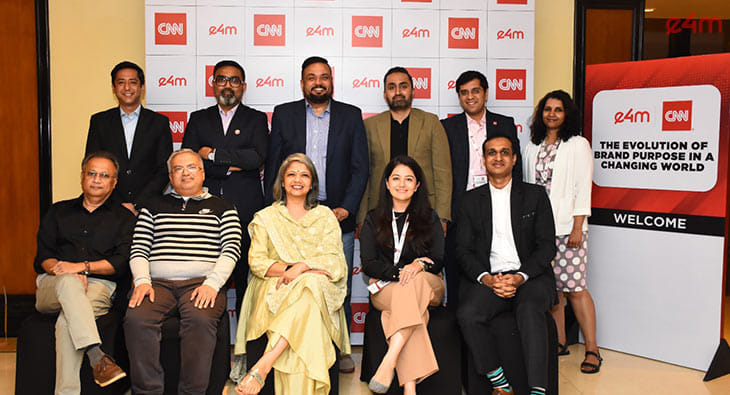

The evolving landscape of brand purpose was the focal point of the conversation moderated by Aparna Tadikonda, Business Leader at Interactive Avenues. This insightful panel discussion was brought together by e4m and CNN International Commercial and included diverse industry leaders to explore how brands are redefining their purposes to stay relevant in the current age. Participants included Dathesh Rao from IBM, Anindita Veluri from Adobe India, Bala Debur from Kyndryl, Kaustubh Chandra from Airtel Business, Dr. Ashish Bajaj from Narayana Health, Sudharsan Rajagopalan from Dell, Sooraj Balakrishnan from Acer, Meher Anand from CNN and Ankit Sood from ITC Gardenia. They discussed the challenges of building brand equity, the impact of digital and social media, and the importance of internal alignment in defining and maintaining brand purpose. The conversation highlighted how brands across various sectors—from technology to healthcare—are navigating the complexities of modern consumer expectations while staying true to their core values.
To understand how one builds ‘Brand Equity’ through purpose in this evolving space and what challenges do you face?, Dathesh Rao, Leader-Brand Marketing, IBM, said “Everyday is a brand new day and I still continue to ideate and to create things at IBM, for example if the company hadn’t invested by 1993 and created a market and sold its product, It wouldn’t have survived this far and built a legacy of 113 years with so much competition.” When asked about, if there is a formula to create the kind of legacy and create a brand purpose in the eyes of customers?
Anindita Veluri, Director Marketing, Adobe India, mentioned how she believes that every brand has a story and your ability to empower people to tell the story better has kept her empowered. Bala Debur, CMO, Kyndryl continued to add “With new narratives and new concepts of brand purpose evolving, he is as good as his last idea.” When asked about the brand purpose with which Airtel business moves forward Kaustubh Chandra, CMO Head of Sales Operations & Digital Sales Group, Airtel Business said that the biggest challenge was how do you create a brand out of it? For a brand like Airtel wherever you go, you do definitely get your foot through the door easily and you don’t want that to change but then your name only gets correlated into being a telecom brand , then how do you then translate that into B2B? and how do you ideally build a B2B business? Here he commented that Airtel stands for being alive, being inclusive, and being respectful and that it’s all about customers and all of this translates to one question- is my customer happy? And provides you with insights to growth. He then talks about how they have a customer oriented approach, how they change the game while maintaining the values of a larger brand and still try to create a niche around it, leverage it, and provide the same level of consumer experience while also building trust with the brand.
Healthcare brands are considered to be rather less marketing oriented as commented by the mediators, when asked how their company has shaped their brand purpose in the healthcare realm, Dr. Ashish Bajaj, Chief Marketing Officer, Narayana Health said “Healthcare is the only market where the consumer is making a purchase under stress, the purpose of a HealthCare brand like ours, standing for 24 years, is that if the solution is not affordable at a Health Care level then it is not a solution. He came in with some numbers and reports wherein the average expenditure at any corporate hospitals is around 1.5 Lakh per patient and Narayana health provides it at 70k, he added that it has to work for everyone in their brands and that separates them from rest of the industry.
With the current marketing realm it’s important to understand that there are instant business results, and then there is bringing brand value over the time, how it is relevant to brand purpose and how it can be continued to be made strong, was put up by the Aparna, which divided the room in two different perspectives. Chandra said that two things need to go hand and hand. You cannot just focus on Brand value and sustainability, you need to also focus on the Roi and the Interconnectedness of a company. The ethos has to come internally and built from inside out, how it is extremely important that the brand purpose stays consistent and properly translated inside the company first and then resonated outside.
But Rao interjected that brands today don’t work on this principle. The companies built over the last 5-15 years collapsed because they are just focused on mission, vision, and brand positioning. For example personality driven branding, their brand purpose isn't very well defined. At IBM, our brand purpose is very defined: ‘The catalyst for progress’ and in 50 years this has been consistent to our brand. Chandra replied that these small companies work on survival initially, the first few years all about surviving and keeping the business afloat. Veluri agreed and said that there is no brand without brand purpose. It is how well defined the purpose is and how it is demonstrated internally and externally.
She continued to comment that the combination of time, effort , money, and impact is what creates the brand purpose. “Mostly the relevance and nuance of it depends upon the shareholder or stakeholder, which is the huge difference. Organizations that are more shareholder specific, tend to be more ROI centric, whereas organizations that are more stakeholder specific, tend to have a bigger purpose, like societal values. For startups in the beginning, it’s more important to be value creators. This aspect of how well the purpose is entrenched in the company works great to take brand value forward. Added Sudharsan Rajagopalan, Global Marketing Executive, Dell.
It was a common statement given by most of panel that internal articulation of a brand identity is extremely important, as pointed out by Ankit Sood, Head of Sales & Marketing, ITC Gardenia and how it is important that internal departments reflect what your brand has to say, so that resonates with the customer. It’s not a small, simple, or, instant step, rather this takes time and consistency, even if you have a brand purpose it’s a process to build on it claimed Veluri.“Brand purpose should be built through a core and not just for instant social validation as a driver”, added Debur.
The question of how consumer Expectations over a period of time has changed brand purpose and with the rise of digital media social media, how important it is to understand the new consumer, i.e, millennials and GenZ in this whole conversation about brand purpose? Sooraj Balakrishnan, Head Of Marketing, Acer, had some interesting insights as to how they created relevance to modern customers like the GenZ. According to him, GenZ are known to have a short attention span, they have the need to feel as a part of a community, and to have a sense of being cool or different or, to get social validation, and in order to cater to this Acer came up with gaming Laptops. Balakrishnan added that the language of how we talk about technology and gaming has changed. How there has been a shift in the ethos and tonality, it’s not exactly modernizing but a tone change. As they are foraging in the gaming realm, the question about sustainability or any other purpose for that matter has been their new goal. “Earlier the parameters and attributes of purchase used to be, for example, product performance, such as utility performance but now the things have changed, it’s things like societal values and what it does for the greater good, is considered now, “ said Balakrishnan
When asked about how they are making ITC relevant in this age, Sood said that customers today are extremely well-educated, informed, and they aren’t just looking for an experience. But now the customer is very features oriented, infact 20% of Indians in 2024 book a hotel to get some sleep, says some statistics. It is important for ITC to stay in business and provide what the customer is actually looking for and listen to their inputs. While the goal of brand purposes were questioned , Veluri talked about how Adobe has the simple purpose of allowing creativity and empowering individuals. How connectivity and reinvention are its core values, how they are extremely user-oriented and, how they think with the current competition with Gen AI and other competitors, “Disruption has become innovation for them”.
When the same question was asked for Dell Balakrishnan talked about how data which usually had hearty models is now getting democratized. From data not being an ally to being an ally, the consumer is now not enamored or challenged by the data. They are into iterative learning, future skills, fast adopters of new products, experimental in nature, and with the kind of confidence they bring, is what drives the market in terms of ROI. Lastly when asked how do you measure the kind of consistency of a brand purpose to be communicated or translated to consumers, Debur said that the intent of the face of the brand, the metric of internal and external affinity, the consumer intent, company aim for creating higher values which are outcome-based initiative (could be sustainability or vision) always helps them measure up the way they translate the brand purpose. For the final comment of the session, Chandra added how defining the outcomes tangible or not, for example, ‘Sustainability’ has to be part of the brand and its an RFP must now, and not a plus. Everything boils down to ROI, as brand building is a slow process and doing numbers is the main purpose of any business.
When discussing initiatives CNN has taken as a brand to showcase its brand purpose, Meher commented, “At CNN we really walk the talk, sustainability is not just an option but an obligation in today's day and age. So for us sustainability isn’t actually the new buzzword that came in the past few years but our Founder Ted Turner over 40 Years ago, has been a pioneer in environmental issues. So as a part of a lot of the campaigns we do, we have an in-house production studio called ‘Create’, in different parts of the world like Hong Kong, India etc. Production is a very heavy part of our brand partnerships. A lot of the production leads to a carbon footprint and we've identified that as a problem, so since January 2022, there is a platform called 'Ad-green', where anything and everything we do for production through create, we try to minimize it and whatever carbon footprint is created it is accounted for and the same amount is offset to another platform called ‘Ecology’, which is another green platforms with projects. To name a few projects that truly empower and inspire sustainable actions include Call to Earth, Tech for Good, Going Green etc. So we understand how important it is to have brand value and then follow through to keep it intact.”
The panel concluded that brand purpose is no longer just a marketing term but a critical component of long-term success and relevance. It requires a deep understanding of evolving consumer expectations, particularly among younger demographics like Gen Z, who value authenticity, inclusivity, and social responsibility. Brands need to balance immediate business results with the sustained creation of brand value, ensuring that purpose is reflected both internally and externally. The session underscored that defining and communicating a clear and consistent brand purpose—whether it’s about innovation, customer-centricity, or sustainability—is essential for building trust and legacy. As highlighted by the panellists, the true test of brand purpose lies in its alignment with company actions and its ability to drive meaningful impact, both within the organization and in the broader market landscape.
Read more news about Marketing News, Advertising News, PR and Corporate Communication News, Digital News, People Movement News
For more updates, be socially connected with us onInstagram, LinkedIn, Twitter, Facebook, YouTube & Google News
