Each of us can do our little bit to contribute to a better India: Rajeev Budhiraja
A proposed ten-point charter seeks to help citizens assess their civic habits and contribute to cleaner, more considerate communities
 by
Published: Nov 23, 2026 9:38 AM | 7 min read
 Follow Us
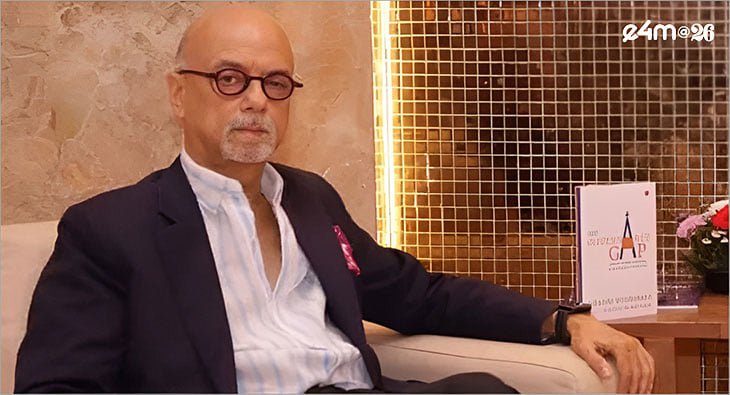

What will it take to make civic responsibility an everyday habit in India? Advertising and Marketing veteran Rajeev Budhiraja, Director of the Manorama and Shashi Budhiraja Foundation, speaks to Ruhail Amin about the experiences behind his civic consciousness initiative, the role of schools and his plans for a voluntary civic charter.
What inspired you to think about a civic awareness initiative?
About a year ago, my father and I released a book on the governance gap and the challenges facing India. The book focused largely on what the system or the government was lacking.
Over the past five years, I have been visiting India every two to three months. I live in Dubai, but during my visits, I have observed what I feel is a deteriorating sense of civic consciousness.
Three experiences in quick succession stayed with me. At a panel discussion on our book at a business school, I asked a senior diplomat what advice he would give young people entering the real world. He reminded them that when they travel abroad, they represent India. He said that while he had once heard people talk about the “ugly American”, he was now hearing references to the “ugly Indian”. That struck a nerve because there had also been media reports about the behaviour of some Indian tourists.
Soon afterwards, I read about a municipality in Mysore installing reflective mirrors on walls to discourage people from urinating there. I thought it was sad that money had to be spent on preventive measures when it could potentially be used to build public toilets.
Then, while walking in Leisure Valley in Chandigarh, I saw litter in a corner, directly below a bin. I checked whether the bin was full, but it was almost empty.
These experiences, along with conversations with friends, family and colleagues, made me realise that we as individuals are also responsible for improving governance standards in India. We cannot expect the government to do everything.
For me, civic consciousness is about how we behave in shared spaces and outside our homes. If all of us make even a small improvement, the collective impact can be significant.
What does civic consciousness mean beyond keeping streets clean and following traffic rules?
Litter and road behaviour are probably the two most visible aspects, but civic consciousness extends much further.
It includes how we stand in queues, how we treat and respect one another, and how considerate we are in shared spaces.
For instance, do we speak loudly on our phones in a cinema? Do we use our phone speakers when we should be using headsets?
It also applies online. Do we forward WhatsApp messages without verifying them? That, too, is a question of civic behaviour.
We have put together ten categories for a civic consciousness charter. Roads and litter account for only two of them. The other areas include issues such as corruption, respect for public property and responsible behaviour online.
Many people value cleanliness inside their homes but do not extend the same care to public spaces. What do you think explains this?
It is an interesting subject, and I would be cautious about claiming a definitive answer. I have heard people connect it to spirituality, the caste system and various cultural factors. Personally, I would point to two aspects.
First, as a large developing country, we have to deal with shortages and constraints on capacity. When people struggle to get access to something, it can create a “me first” attitude. Someone may break a queue or rush ahead because they worry there will not be enough for everyone. Scarcity creates stress.
Second, there is the issue of weak enforcement. We have rules, but they are not always implemented.
Take the Delhi Metro as an example. People generally follow the rules inside the Metro but may behave differently outside it. Within the Metro, there is guidance, repeated messaging, clarity about the rules and enforcement.
I am also often asked why Indians follow rules when they live or work in the UAE but do not necessarily do so in India. Enforcement is an important part of the answer.
So, in my view, it is a combination of genuine capacity constraints and weak enforcement.
What changes civic behaviour most effectively: education, enforcement or social pressure?
It requires a combination of all three. Awareness is important because people need to know what is expected of them. But information alone is not enough to change behaviour.
There have to be incentives, enforcement and consequences where appropriate. Over time, social norms matter as well.
Take Indore. Civic cleanliness became a priority through a combination of political and administrative will. As the city received recognition for its cleanliness, that achievement became a source of pride for its residents.
When waste collection vehicles go around in the morning, they play an anthem celebrating Indore’s standing. People from the city speak proudly about it, and many take part by avoiding littering and helping keep their surroundings clean.
What began as an effort involving the municipal administration and political leadership became a wider movement and, over time, a social norm. That is why a combination of measures is needed.
How can schools help make civic responsibility a daily habit?
Schools have a critical role to play. In my generation, we had moral science and civics classes. Moral science was sometimes treated as old-fashioned, but it communicated many simple and useful ideas.
Today, schools face considerable pressure to deliver the core curriculum, and teachers and leadership teams can be reluctant to take on new initiatives. Even so, I think there are opportunities to make civic learning more practical.
One is to expose children and young adults to how less privileged communities live. Many students have limited exposure to life outside their campuses during their education.
My parents’ foundation is working with different institutions on initiatives that can introduce students to community service and social responsibility. With one institution in Gurugram, there is a zero-waste-to-landfill initiative. With another in Uttar Pradesh, there is an effort to introduce a programme under which students would spend a number of hours outside campus on social initiatives.
Schools can also involve children in finding solutions to issues within their immediate surroundings. That could mean addressing cleanliness or managing traffic outside school gates during pick-up and drop-off times.
If students are involved in finding solutions from an early age, they can develop a stronger sense of responsibility towards the communities around them.
What do you hope to achieve over the next 100 days to six months?
The immediate effort is to develop and refine a ten-point civic consciousness charter. It covers areas such as traffic, litter, respect for public property and verifying messages before forwarding them.
We are also developing a scoring system that individuals can use privately to assess their own behaviour across the different areas. The idea is not to make anyone’s score public, but to help people see where they stand and whether they are making progress over time.
For example, if someone scores 50 overall and improves to 55 six months later, that is progress. The point is to encourage people to reflect on their own habits.
Over the initial 100 days, we would like to gather feedback and arrive at a more definitive charter. People may suggest that certain points need to be refined or that other issues deserve greater attention.
Once the charter is ready, the intention is to share it through social media and other platforms so that individuals can voluntarily sign up and commit to trying to follow it.
It is a good-intentioned, voluntary effort to build a little more civic pride and encourage each of us to do our bit towards a better India.
Read more news about Marketing News, Advertising News, PR and Corporate Communication News, Digital News, People Movement News
For more updates, be socially connected with us onInstagram, LinkedIn, Twitter, Facebook, YouTube & Google News